    Scar removal — medically indicated

    Scar removal with laser in Copenhagen

    Scars don't have to define you. At Past Tense we treat scar tissue in medically indicated programs — with the goal of making scars softer, more pliable and less visible, and reducing symptoms like tightness, itching and pain. Treatment is virtually painless: you choose your own comfort level, from numbing cream to treatment while you sleep.

    Scan your skin free
    Gentle laser scar treatment at the clinic

    In brief

    Scar removal at Past Tense is laser treatment of scar tissue with Fotona StarWalker® PICO Pro. The laser stimulates the skin's own collagen remodelling without removing the skin's surface, so scars can become softer, more supple and less visible. Treatment is pain-free with anaesthesia, and most people need 4–6 treatments. In a trial, only one half of each scar was treated: an independent dermatologist could see a difference in 24 out of 25, and 84% assessed their improvement as at least 50%.

    Randomised trial, 2023 (atrophic scars, skin types III–V, results after 3 months, n=25). Results are individual. We treat scars on medical indication. Registered with the Danish Patient Safety Authority.

    Why patients choose Past Tense

    Medically indicated

    Every program is assessed and approved in collaboration with our associated specialist, PhD Hans Christian Plaschke.

    AMWC award-winning laser 2026

    Fotona StarWalker® PICO Pro — named Best Laser, Light & Energy-Based Device at the AMWC Aesthetic Medicine Awards in Monaco 2026 — delivers precise, gentle treatment of both new and mature scars.

    Registered with the Danish Patient Safety Authority

    We follow the Danish Health Act and strict clinical protocols. Treatment site registered.

    You choose your comfort level

    Numbing cream, injection anesthesia or medical sedation — so you can go through without discomfort.

    Softer, more pliable, less visible

    The aim is to reduce itching, tightness and pain in the scar tissue — and to make the scar less visible over time.

    The world's only AI scanner for scars and tattoos

    Scan your scar from home and get a guiding estimate before you even book.

    How your program works

    1

    Free consultation

    We assess your scar, review your history and put together a concrete plan with you — with a precise price.

    2

    Virtually painless treatment

    Sessions are performed gently with the Fotona StarWalker® PICO Pro. The doctor sets the interval between treatments, as a rule 4-6 weeks. The pause is part of the treatment.

    3

    Follow-up & documentation

    We photo-document every treatment so you and the specialist can follow the progress — image by image.

    What you get with us

    • ✓ AMWC award-winning laser 2026
    • ✓ Dedicated associated specialist
    • ✓ The world's only AI scanner for scars and tattoos
    • ✓ Free consultation with medical assessment
    • ✓ Photo-documented program image by image
    • ✓ Registered with the Danish Patient Safety Authority
    We work beneath the skin — not on it
    How it works

    We work beneath the skin — not on it

    The laser sends ultra-short light pulses into the skin — each pulse lasts 300 trillionths of a second. The pulses work photoacoustically, with mechanical pressure rather than heat: they break down the tight, disorganised scar collagen and trigger the skin's own production of new, finer collagen. The skin surface stays intact throughout. Intense on the scar tissue, gentle on the skin — that's the whole idea.

    Scar removal — medically indicated

    A realistic promise

    A scar rarely disappears completely — but it can become significantly less visible, softer and more pliable. Results are individual. We don't promise miracles; we show you the documentation, make a plan with you and follow it — image by image.

    And your own experience counts. In a clinical study, the person's own experience of the scar explained the burden better than the doctor's objective assessment — and even scars others never see could weigh heavily. You don't have to wait until it becomes “bad enough”.
    — Clinical study, specialised scar clinic, 2010
    01
    24 out of 25 — that is how often an independent, blinded dermatologist could see a difference between the treated and untreated part of the scar in a randomised split-scar study of mature scars. 84% of patients rated the improvement at least 50% themselves.
    — Randomised split-scar study, Lasers in Surgery and Medicine, 2023
    02
    82% reported improved scar texture after non-ablative fractionated laser treatment of mature scars — improvements grew over time and were confirmed down to the cellular level six months later.
    — Randomised controlled trial, Bispebjerg Hospital, 2015.Read the study on research.regionh.dk

    Forbehold: The study used a different laser in the treatment category we work with — non-ablative fractionated laser. Results are individual.

    03First-line
    Laser is recognised as first-line treatment of traumatic scars by 26 international experts from 13 countries — and the experts prefer picosecond lasers over older nanosecond lasers by a ratio of 2:1.
    — International expert panel, 2020
    04New scar? Time matters
    Mature scars can be treated — several of the strongest studies were done on scars that were years old. But new scars have a documented advantage: in a randomised study, four treatments of new surgical scars reduced the average scar width by 75.3% and thickness by 84.9% — while untreated control scars showed no such changes. If you have a new scar after surgery or a caesarean, the free consultation is worth taking early: we can plan while the advantage is greatest.
    — Randomised controlled study, 2025

    Forbehold: The numbers apply to new surgical scars (less than a month old) — they document the value of coming early, not a promise for old scars.

    Scars we treat

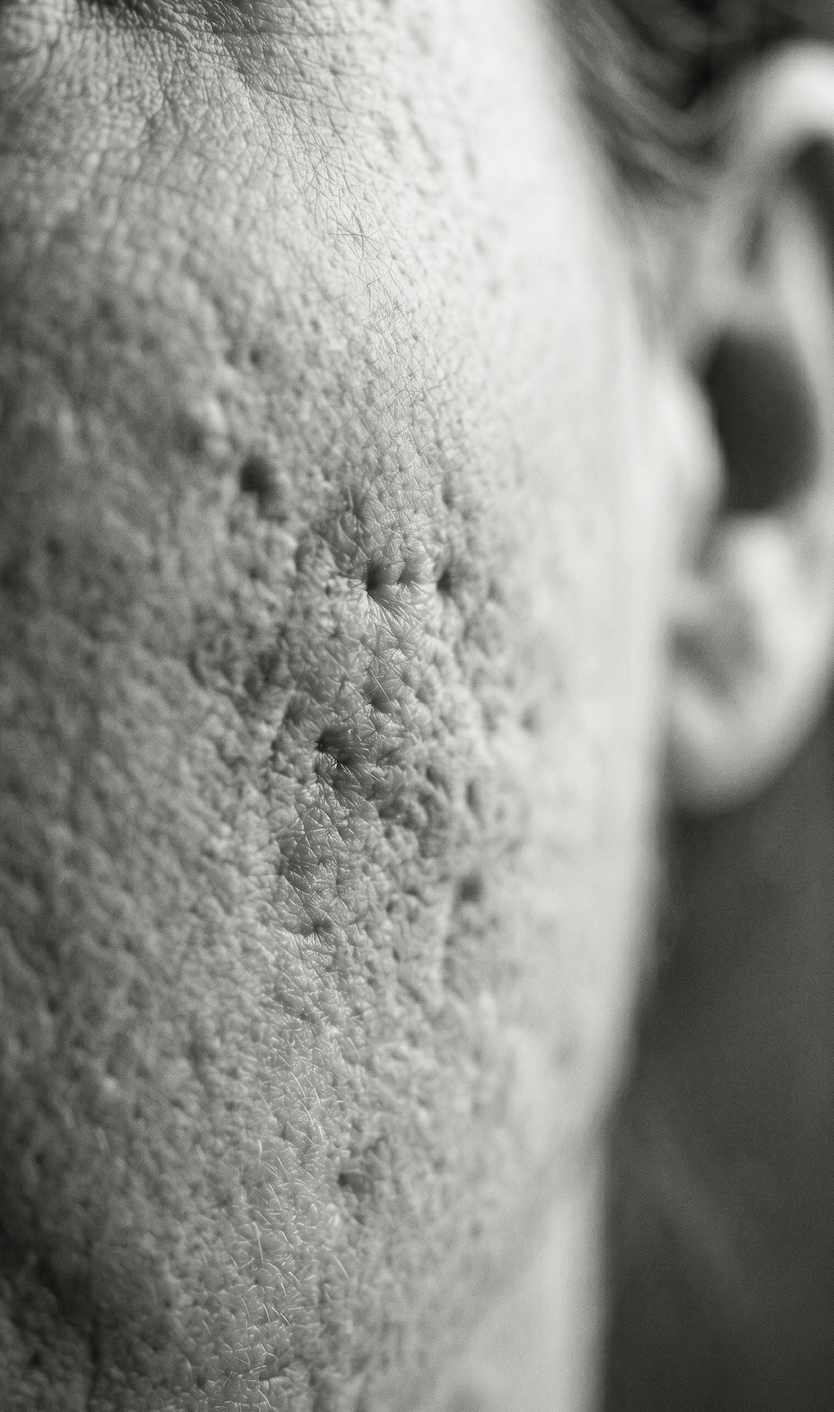
    Calm portrait detail of skin after acne scar treatment

    01

    Acne scars

    47% of everyone with acne develops scars — you are far from alone. And many tell us that the scars ended up mattering more than the acne ever did: in the mirror, in photos, in the way you hold yourself back.
    — Clinical meta-analysis, Skin Research and Technology, 2023

    Research confirms it: in a multinational study of adults with acne scars — without active acne — three out of four viewed the scars as a current concern.

    — Multinational study across six countries, 2022

    Atrophic scars in particular — the depressions after acne — are among the best-documented areas for fractional picosecond laser. In a randomised, blinded split-scar study an independent dermatologist could see a difference between the treated and untreated part of the scar in 24 out of 25 patients (96%). And 84% of the patients themselves rated the improvement at at least 50%.

    — Randomised split-scar study, Lasers in Surgery and Medicine, 2023

    Psychological burden is a recognised medical reason for treatment. We take that seriously — from the first conversation.
    Woman sitting calmly with hands in her lap

    02

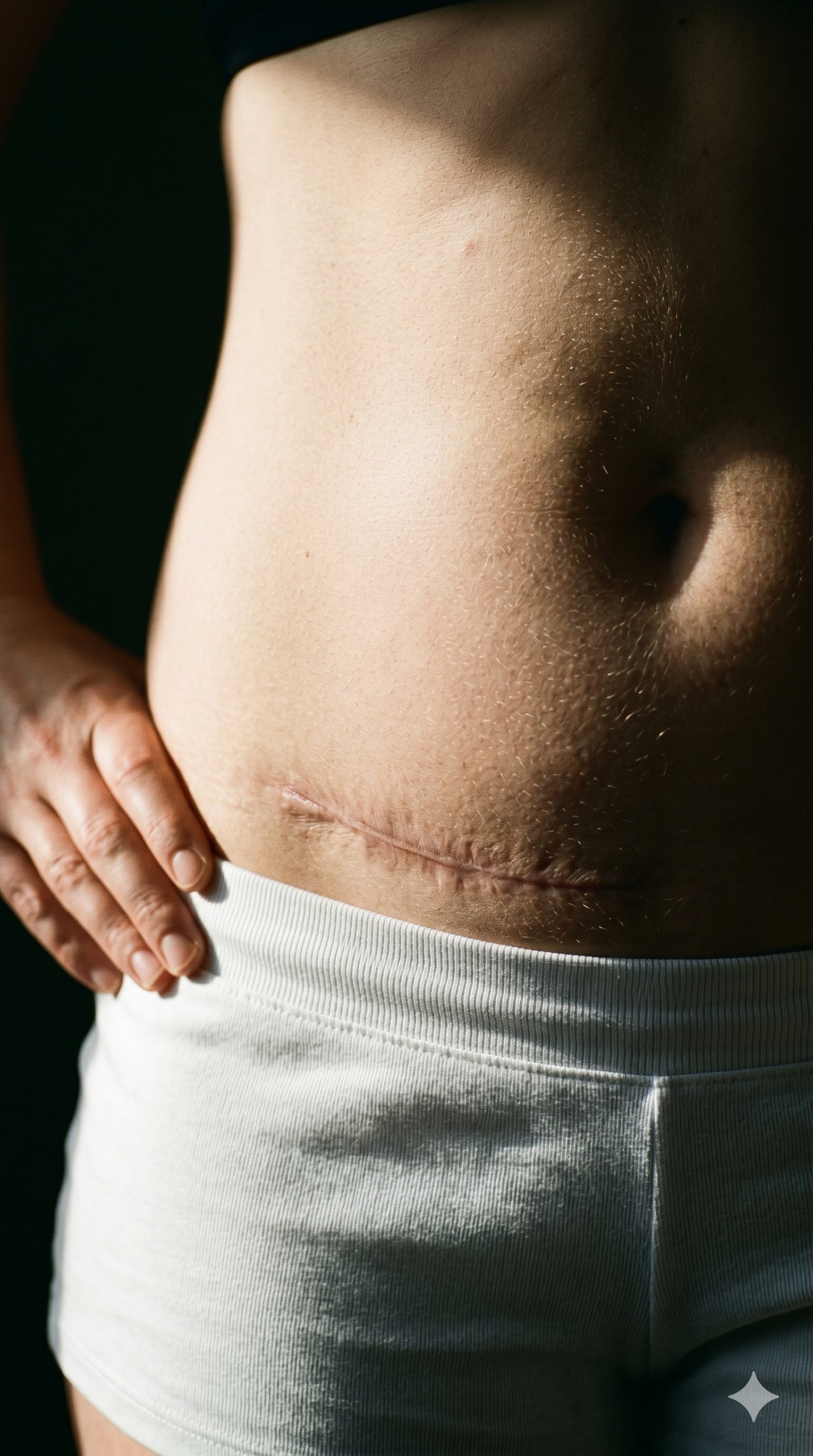
    C-section scars

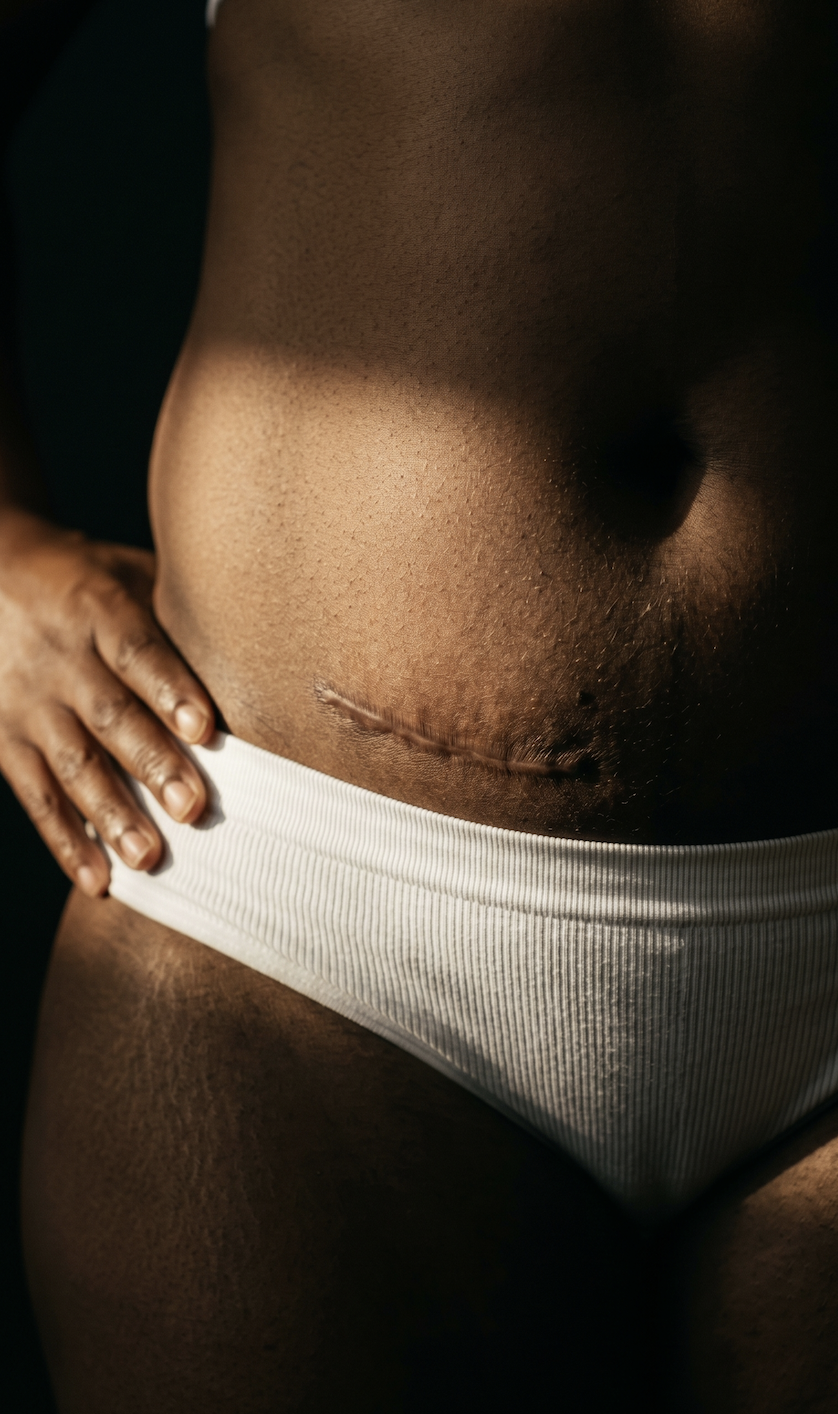
    A C-section scar sits in a place you see every day. Some carry it without thinking about it — others experience that it tightens, itches or just takes up more space than they want. Both are perfectly fine. We're here for the latter.

    Mature C-section scars have been studied directly: in a randomised controlled split-scar study the scars' pliability and surface texture were significantly improved — with full effect six months after treatment.
    — Randomised controlled split-scar study, Lasers in Surgery and Medicine, 2017
    If your scar is new, there is good reason to come early. In a randomised study of new surgical scars, four treatments with fractional picosecond laser reduced the scars' average width by 75.3% and their thickness by 84.9% — while the untreated control scars did not show similar changes.
    — Randomised controlled study, 2025
    Woman in light knitwear by a window in soft daylight

    03

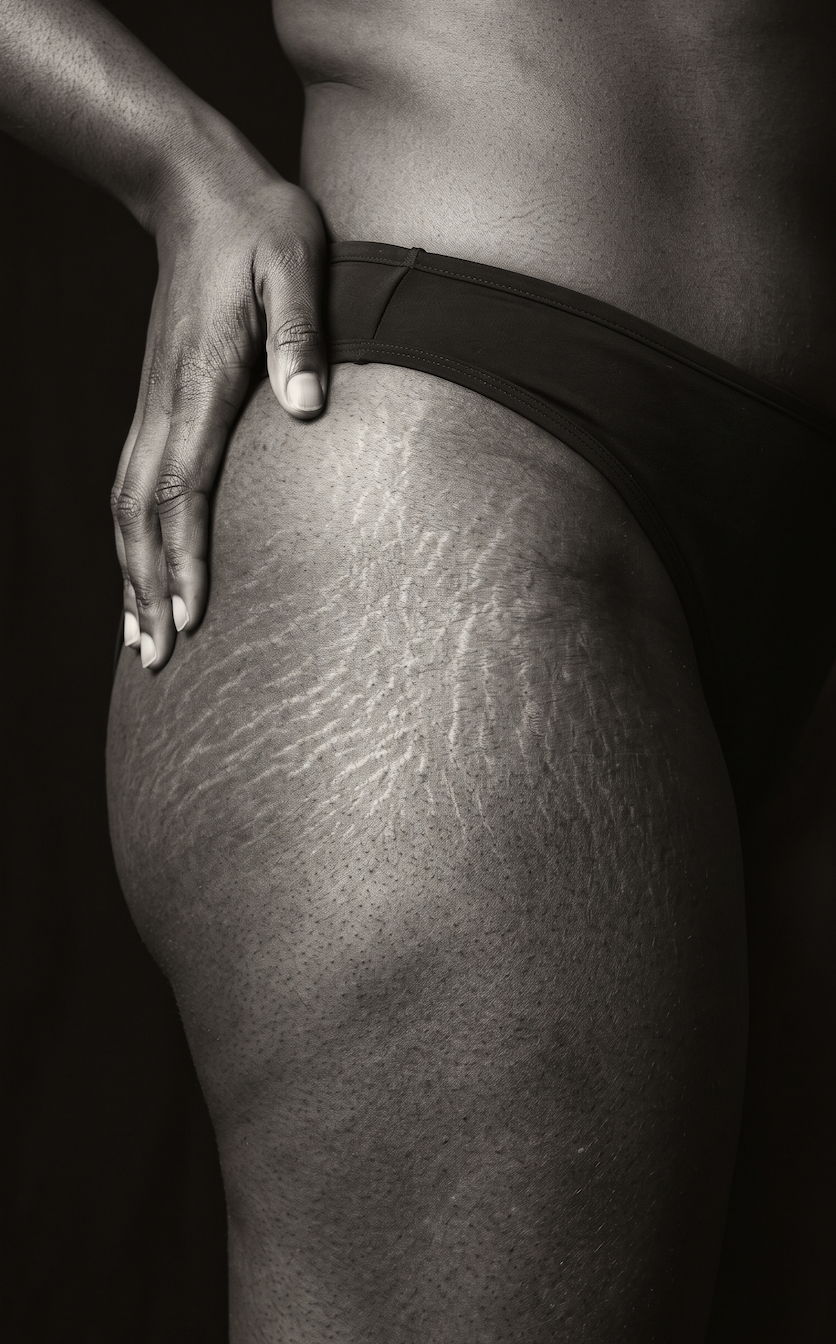
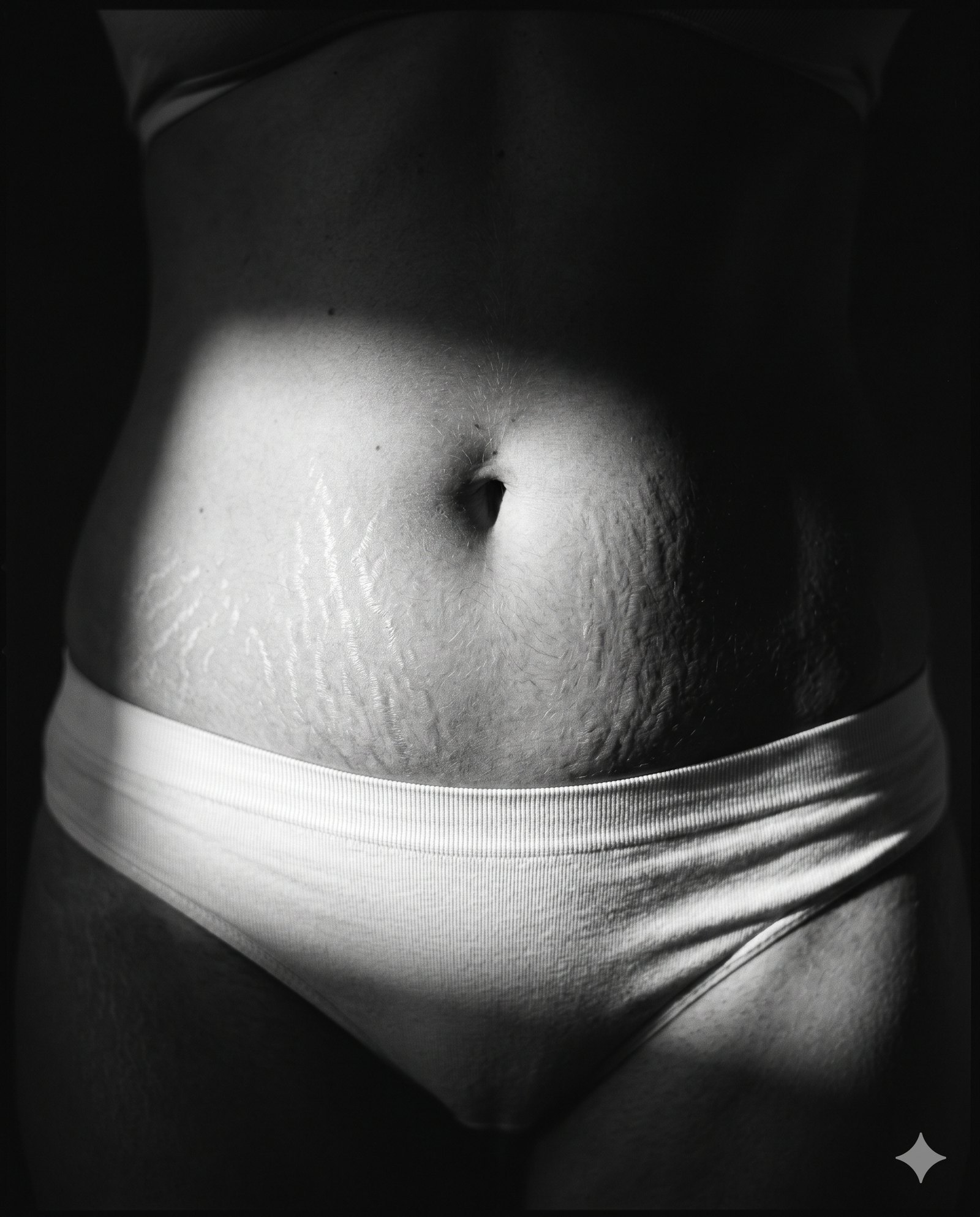
    Stretch marks

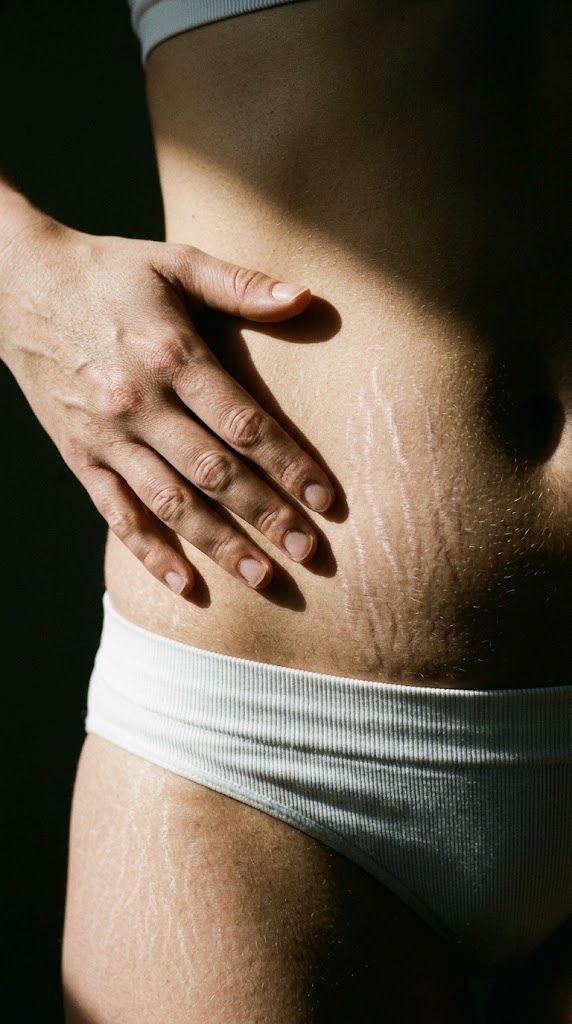
    Stretch marks appear when the skin has stretched because life happened — pregnancy, weight changes, growth. They are scar tissue in the deeper layers of the skin, and they don't disappear on their own or from creams. But they can become softer, more supple and markedly less visible.

    Three out of four pregnant women with new stretch marks were most worried that the marks would be permanent. That's worth knowing: they don't go away on their own — but they can be treated.
    — American study of pregnant women with new stretch marks, 2021
    In a clinical study, 9 out of 10 participants had a clear — moderate to marked — improvement of mature, light stretch marks after four treatments with fractional picosecond laser. Objective 3D measurements showed that the skin continued to improve up to six months after the last treatment.
    — Clinical study, Lasers in Surgery and Medicine, 2022
    The result is also documented on light skin: in a clinical study of women with mature stretch marks, independent dermatologists assessed an improvement in 81% of participants.
    — Clinical study, Lasers in Surgery and Medicine, 2021
    Calm detail of skin with a surgical scar

    04

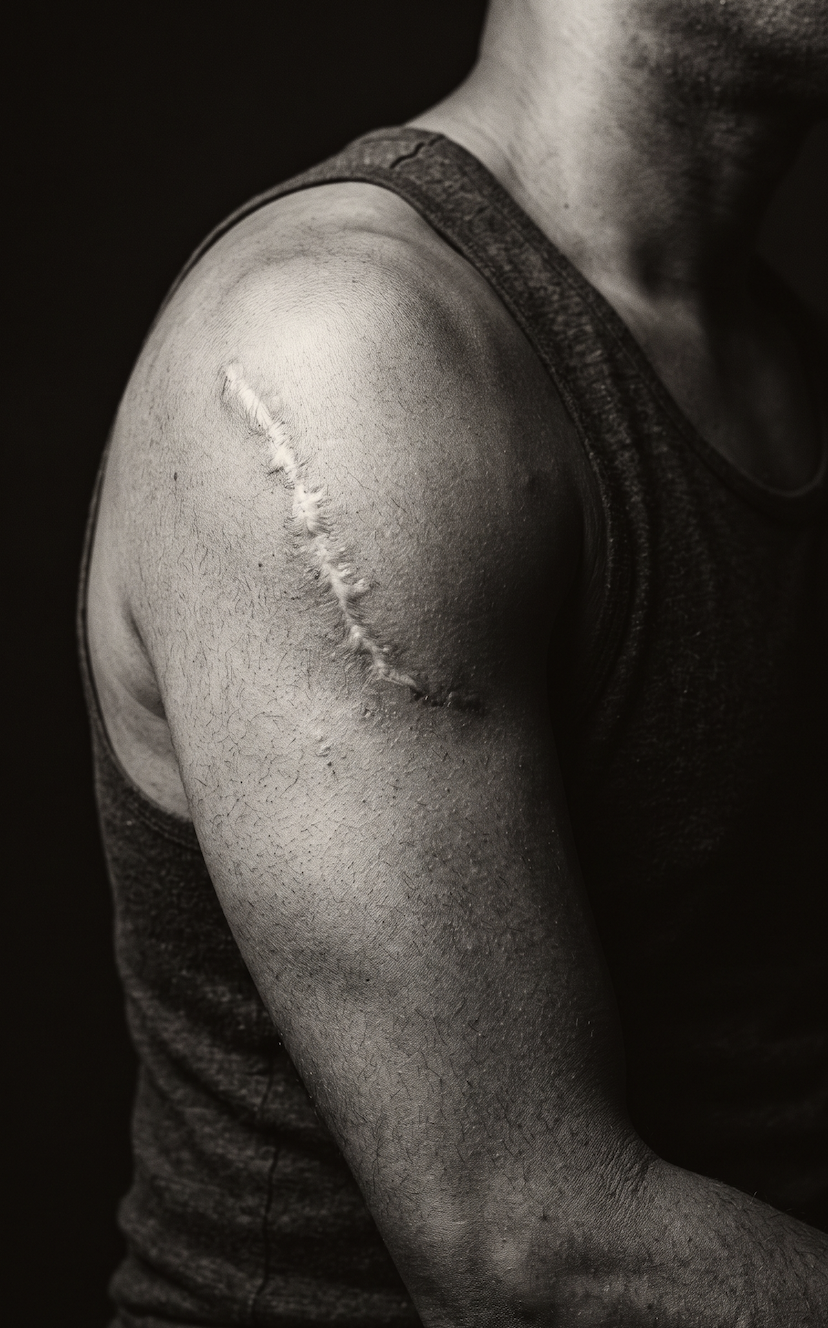
    Surgical and traumatic scars

    Scars after breast surgery, accidents, burns or acid injuries are often the ones that bother the most — physically as tightness, itch and reduced mobility, and psychologically because they are hard to forget. Both are medical reasons for treatment.

    About one in three reported pain from the surgical scar itself — even though more than eight out of ten were satisfied with how the scar looked. A scar can bother, even when it "looks fine" — that too is a medical reason.
    — Clinical study after breast surgery, 2021
    The Danish Bispebjerg trial was done on precisely mature scars after burns: 82% reported improved scar texture, and the appearance of the scars was significantly improved.
    — Clinical study, Bispebjerg Hospital, 2015

    Keloid scars — scars that grow beyond the original injury — we do not treat as a rule. They require a special assessment, and laser never stands alone there. We clarify that honestly at the consultation.

    Portrait detail of a person with deeper skin tone in soft light

    05

    Scars on darker skin

    Many with darker skin fear pigment changes after laser treatment — our laser minimises exactly that risk. The ultra-short pulses work with mechanical pressure rather than heat, and fractional lasers are documented as a suitable choice on all skin types, including darker skin.

    — Evidence review, Mount Sinai New York, 2017

    The international expert panel points the same way: picosecond lasers are preferred 2:1 over older nanosecond lasers for hyperpigmented scars.
    — International expert panel, 2020
    And in randomised comparisons on darker skin, fractional picosecond laser gave comparable scar improvement to intensive ablative methods in the specific trials — with markedly fewer pigment changes.
    — Randomised controlled studies, 2021 & 2023

    The laser we treat with

    StarWalker® PICO Pro — the same laser is used for tattoos, PMU and scar tissue. See the technical specifications and why they matter for your result.

    See the laser technology

    Your options — honestly compared

    There are several paths to take with a scar — and not all of them go through us. Here is the short, honest version:

    Creams and oils

    Stretch marks and mature scar tissue sit in the deeper layers of the skin — they do not go away by themselves or from creams.

    Surgical revision

    May be the right choice in some cases — but it fundamentally trades one scar for another. If it is the best path for you, we say so.

    Ablative lasers (e.g. CO2)

    The most intensive fractionated treatments — effective, but with more pain and typically 5–14 days of downtime because they remove the surface of the skin. We work non-ablatively: the skin stays intact and the downtime is typically 24–48 hours of mild redness. In randomised comparisons, fractionated picosecond technology delivered comparable scar improvement — with markedly fewer pigment changes.

    — Randomised controlled studies, 2021 & 2023

    The honest walk-through of your specific options — including those we do not offer ourselves — is part of the free consultation.

    The AI scanner's estimate

    Scan your tattoo or scar from home and get a guiding estimate of number of treatments and price — before you even book.

    Prices

    What does scar treatment cost?

    From 900 kr. per treatment — the exact price is assessed individually at the free consultation. In addition, a mandatory doctor's fee of 750 kr. applies, plus an insurance fee of 6 % covering all medically indicated services — i.e. scar and stretch-mark treatment. Pain relief can be added as needed — see below.

    Results are individual. We treat scars on medical indication.

    You choose your comfort level

    • Numbing cream400 kr.

      For most treatments. Applied in the clinic 2 hours before tattoo removal and 1 hour before scar treatment. If you take the tube home: DKK 350.

    • Injection anaesthesia1.000 kr.–2.000 kr.

      Pain coverage of the treated area.

    • Medical sedation3.500 kr.

      For selected courses, sedation may be considered after medical assessment. Specialist present.

    The sun rule: We recommend keeping the treated area out of the sun for a minimum of 4 weeks — at least until it has healed, and a week after that. The skin is sensitive to sun for several months after treatment. Once the area has healed, use sunscreen with a minimum SPF 30. Avoid tanning beds the same way.

    When we say no

    We say no when that is the right answer. Treatment is not performed for:

    • Pregnancy and breastfeeding
    • Active skin conditions or infections in the treatment area
    • Certain medical conditions — we always assess individually together with the specialist
    • Very fresh scars where the skin is not yet fully healed

    At the consultation we review your history. If in doubt, we consult the specialist — and decline, if that is the right thing to do.

    Cancellation & rescheduling

    For cancellations or rescheduling less than 24 hours before your appointment we charge a fee of 500 kr.. Free rescheduling until then.

    Questions and answers about scar removal

    Will my scar disappear completely?

    Rarely — and we say that honestly. The goal is to make the scar softer, more pliable and significantly less visible, and to reduce symptoms such as tightness and itching. In the studies, improvements continue to develop in the months after treatment.

    How many treatments will I need?

    Typically 4–6 treatments, depending on the type, age and depth of the scar. The doctor sets the interval, as a rule 4-6 weeks. It varies from person to person — some need fewer, others more. At the consultation you'll get a concrete plan for your specific scar.

    Does it hurt?

    Treatment is virtually painless — and you choose your own comfort level: numbing cream, injection anaesthesia or medical sedation, which may be considered for select treatment courses following a medical assessment.

    Can old scars actually be treated?

    Yes. Several of the strongest studies were done on mature scars — years after the injury. New scars do have a particular advantage: early treatment of fresh surgical scars gave, in a randomised study, on average 84.9% less scar thickening.

    What does it cost?

    The price depends on the size of the scar and the length of the program. You get a precise, individual price at the free consultation — and you can see our ranges on the pricing page.

    How do I care for the skin after a treatment?

    Keep the area clean with Past Tense Cleanser, moist with Past Tense E&C Vitamin Serum — the best result is achieved with moist healing — and protect it from the sun: keep the area out of the sun for at least 4 weeks — as a minimum until it has healed, and a week after — and use sunscreen with at least SPF 30 once the area has healed (skin is sensitive to sun for several months). Don't use other products on the area. The full program, day by day, is in our aftercare guide.

    Why does it require a medical assessment?

    Because scar treatment is a healthcare service — and because it protects you. The assessment ensures that treatment makes sense for your specific scar, and that we catch everything that requires special consideration before we start.

    Is there downtime — can I go to work?

    Yes, most people go straight back to everyday life. The treatment is non-ablative — the skin's surface stays intact — and downtime is typically 24–48 hours of mild redness that feels like a light sunburn. Only hard training, sauna and sun need to wait.

    Can the treatment make my scar worse?

    In the Danish Bispebjerg trial, no patients experienced worsening. Every treatment has risks — we go through them openly at the consultation, and we only treat when the medical assessment says it makes sense for your specific scar.

    What about creams and oils — don't they work?

    Stretch marks and mature scar tissue sit in the deeper layers of the skin — they don't go away on their own or with creams. The laser's fractional technique works exactly down there: it breaks down the tight scar collagen and triggers the production of new, finer collagen. At the consultation we're happy to review all your options — including those we don't offer ourselves.

    Can I be treated in the summer?

    Yes. After every treatment the sun rule applies: keep the area out of the sun for at least 4 weeks — as a minimum until it has healed, and a week after — and use sunscreen with at least SPF 30 once the area has healed. Skin is sensitive to sun for several months. With good sun protection the program can be planned all year round.

    Can I be treated if I am pregnant or breastfeeding?

    We don't treat during pregnancy. Treatment of scars and stretch marks after birth can normally be approved — also while breastfeeding — but is always assessed individually once the skin and any surgical wounds have healed. Always tell us before you book if you are pregnant or breastfeeding: then we plan a program that fits your situation.

    Disclaimer & Limitations

    Speak with a doctor. We treat scars based on medical indication. Results are individual. We comply with the Danish Health Act (Sundhedsloven) and the Executive Order on Cosmetic Treatment. We are registered with the Danish Patient Safety Authority (Styrelsen for Patientsikkerhed), which falls under the Ministry of the Interior and Health.

    The content on these pages is for guidance only. We reserve the right to errors in texts, prices and image material. Before and after photos are examples of individual results, and we cannot guarantee the same result for everyone, as all skin types and scars are unique. Information on this site cannot replace professional advice. In case of doubt or specific cases, we always refer to a personal consultation with our professional team, where we can make a specific assessment of your situation.

    We use StarWalker PICO Pro – the newest laser on the market, ensuring you a gentle treatment.

    Medically reviewed by specialist physician Hans Christian Plaschke, PhD · Last updated 17 November 2026

    Ready to reduce your scars?

    Take the first step towards smoother skin. Book your free consultation today and learn about your options for medical scar removal. We assess your scar and give you a precise overview of the treatment course and costs. Try our AI tool, which in just a few minutes gives you a qualified estimate of how many treatments your scar requires.